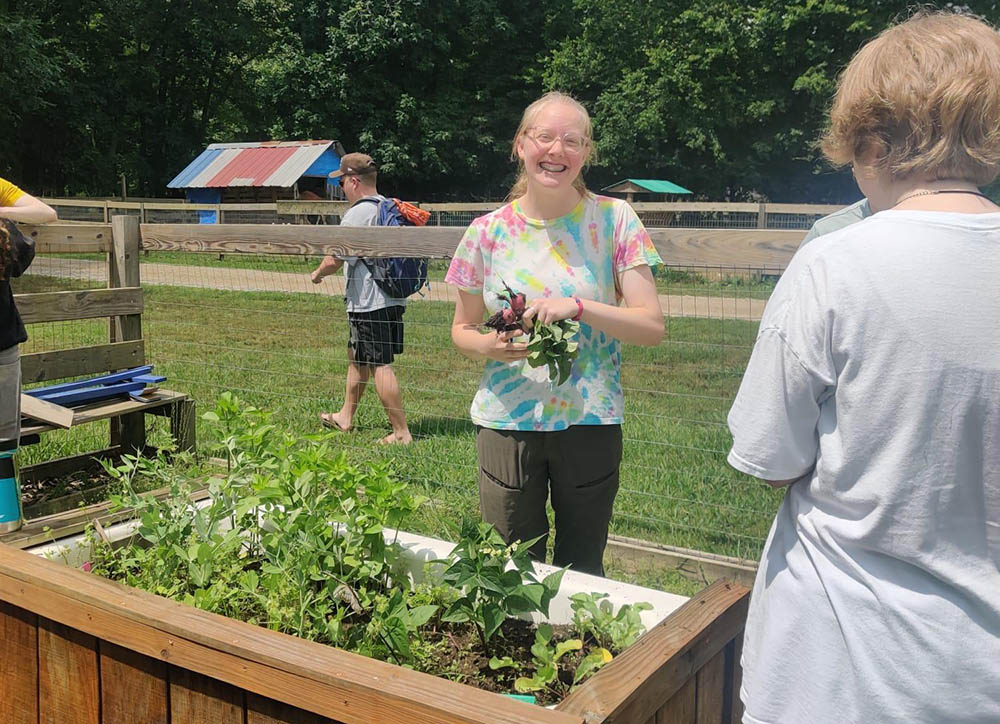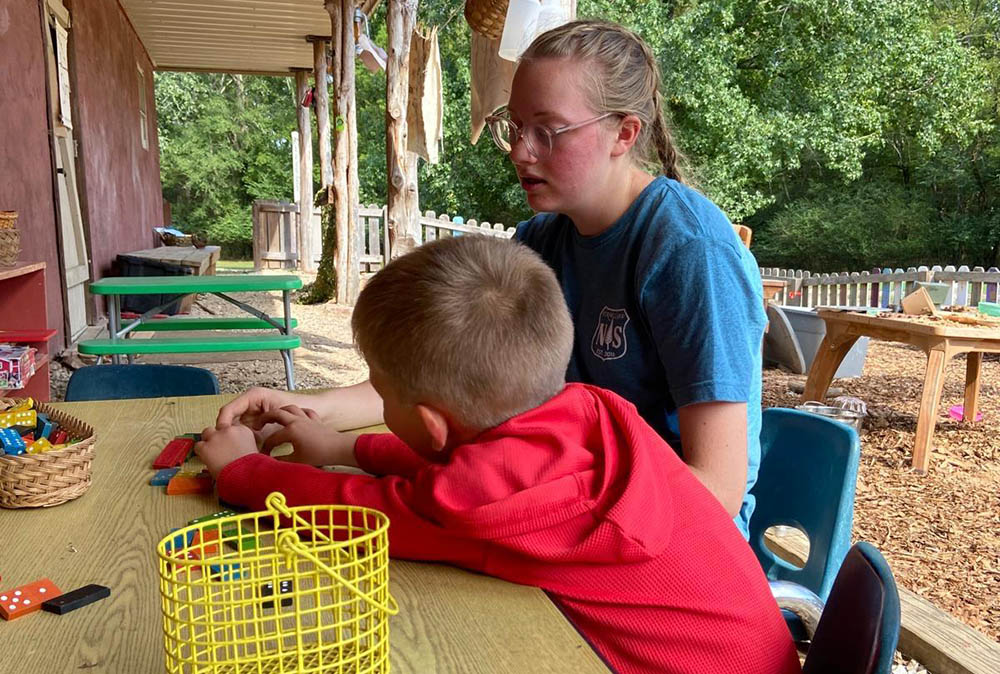
This year, I have dedicated myself to volunteer service, working full time at a nature preschool.
Working with preschool children is an experience that differs from what I anticipated. Being so young and still learning about the way the world works, I expected to be teaching the students things they didn’t know, guiding them towards greater knowledge and maturity. And while I consider myself a “lifelong learner,” I didn’t realize just how much opportunity I have to learn from 3–5-year-old children.
As an experiential educator, I am simply a student with responsibility. A responsibility to mitigate risks, but also a responsibility to fuel growth. I found I was able to better function in my position by changing my mindset from “guiding students to growth,” to “coming alongside the students to learn together.”
One of the most important things I have learned, or re-learned, is how to be observant: how to explore and investigate. While I have great enthusiasm for exploring, in my “adult life” that looks more like climbing mountains or white-water rafting. What I forgot is what exploration can look like in my day-to-day life. While white water rafting counts as exploring, it can also apply to looking down at my wet boots after walking through a puddle. While I have often done this, it never felt like an opportunity to be filled with wonder, but then I see a child walk through the same puddle, and watches intently as the water slides off the edges of their boots, forming new puddles around them.
A quote by Rachel Carson frames this thought process beautifully: “What if I had never seen this before? What if I never see this again?” By following this line of questions, I am led to observe, investigate and explore like a child experiencing these things for the first time.