By Nate Polzin
“By faith Abraham, when called to go to a place he would later receive as his inheritance, obeyed and went, even though he did not know where he was going.”
This verse from Hebrews 11:8 was the theme of the second Church of the Brethren L.E.A.D. Conference held at Ephrata (Pa.) Church of the Brethren on May 1-3. Attendance included 112 people in person and 8 online.
Michaela Alphonse opened the gathering with a challenging sermon reflecting on the need for church leaders to obey God, no matter the cost.
A wide variety of workshops were held in three languages—English, Spanish, and Haitian Creole—with leadership from more than 20 presenters from across the Church of the Brethren.
Three keynote messages further expounding on the concept of following God’s Spirit into unknown places and situations were given by Tod Bolsinger.
An author, professor, and former pastor, Bolsinger drew upon illustrations from scripture and from history to describe how the church in North America in 2026 finds itself in uncharted territory.
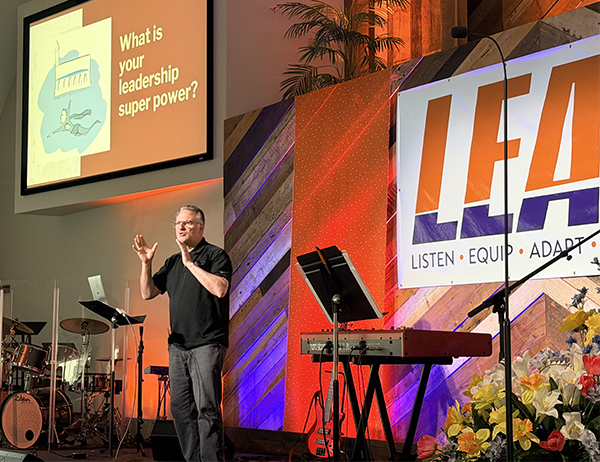
Find a full photo album at www.brethren.org/photos
“What got us here won’t get us there,” was a common refrain in his talks. By that he meant that the landscape of the culture has shifted and Christianity is not the dominant influence it once was thought to be. Relying on old methods and patterns that served the church well in the past may not be as effective in sharing the unchanging Gospel within our rapidly changing world.
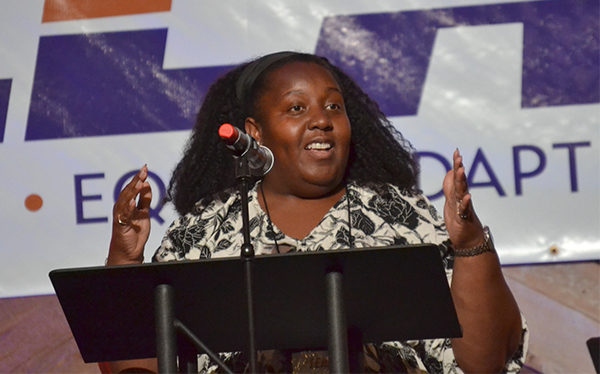
Bolsinger warned the conference attendees that often, when churches decide to make changes, people from within the congregation begin to fear losing what they have had and, perhaps even unconsciously, begin to sabotage the new work the church is attempting. One strategy for addressing sabotage is to assure people about what will never change. Determining what is core to a church’s mission and identity clarifies the essential and constant aspects of the church.
Once those are settled, everything else must be examined in light of that program’s or habit’s usefulness to accomplishing the church’s mission in the present and future. Ministries that have served us well in the past are not bad and they were not failures. They should be celebrated. However, that does not mean they must continue for all time. There may be a more effective way to accomplish the church’s mission in this environment.
The church needs to listen deeply to the people around us to know where they are coming from and what concerns they bring. That way, we will be able to meet them where they are and share with them in ways they will receive.
Church leaders need to equip the people in our congregations with the tools and opportunities to use their God-given gifts to meet the challenges of our day. All of this calls for adaptability on the part of the church so we can be more effective in our ministries.
Finally, discipling needs to be the focus of each congregation. Our goal needs to be the formation of people into apprentices of Jesus Christ. That is what the L.E.A.D. (Listen Equip Adapt Disciple) Conference aims to help our churches do.
— Nate Polzin is executive director of Discipleship and Leadership Formation for the Church of the Brethren. Find out more about the L.E.A.D. Conference at www.brethren.org/dlf/lead-conference. Find an online photo album from the conference at www.brethren.org/photos
#MissionAndMinistryBoard #StrategicPlan #RacialJustice #LoveOurNeighbors #Discipleship #NewTestamentGiving

———-
Find more Church of the Brethren news:
- Brethren Volunteer Service Unit 340 completes orientation
- La Unidad 340 del Servicio Voluntario de los Hermanos completa la orientación.
- Inite Sèvis Volontè Frè yo 340 fini oryantasyon an
- New Pastor’s Manual in Haitian Creole and French to be used in Haiti and Africa
- Nuevo manual para pastores en criollo haitiano y francés para ser utilizado en Haití y África.