For Black History Month 2026, Newsline is offering a feature for each week in February to celebrate our Black forebears in the Church of the Brethren. In this issue, we celebrate the first Black man and the first Black woman to serve as moderator of the Church of the Brethren Annual Conference.
From the January/February 2017 issue of Messenger magazine and other sources:
William A. Hayes
William (Bill) Hayes was the first Black moderator of Annual Conference, presiding over the 202nd recorded Annual Conference held in 1988 in St. Louis, Mo., on the theme “Called into Shalom.”
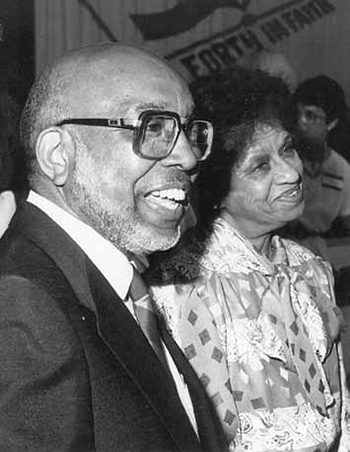
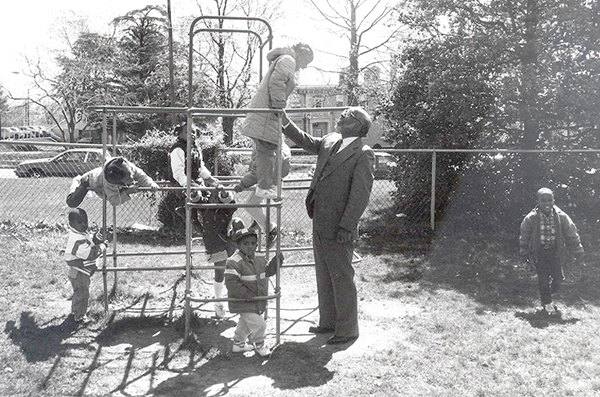
Hayes was a longterm pastor, both in the Church of the Brethren and the United Church of Christ, and was an ecumenical leader and educator at the seminary level. He took part in groundbreaking ecumenical “experiments” including the nation’s first ecumenical church to unite Protestants and Roman Catholics in a single congregation, and an ecumenical interfaith seminary that was based in Washington, D.C.
Over the years of his ministry in the Church of the Brethren, his numerous leadership positions in at the denominational level–in addition to the highest elected office of moderator—included service on the former General Board, chairing the board’s Parish Ministries Commission, chairing an advisory committee on issues of concern for Black church members, and representing the Church of the Brethren at the National Council of Churches.
Born and raised a Baptist in South Bend, Ind., he was the youngest of four children. His parents separated when he was four, leaving his mother to support the children on the meager wages she earned as a domestic worker.
Despite their poverty, Hayes became the first in his family to go to college, graduating from what is now the University of Indianapolis, a United Methodist-affiliated school. It was there that he began to feel called to ministry.
After earning his degree at Colgate-Rochester Divinity School, he had trouble finding placement with the American Baptist Churches and turned to the United Church of Christ. He ended up pastoring a UCC congregation in Buffalo, N.Y., for 12 years. From there, he moved to Kansas City, Mo., to serve for four years as administrative director of St. Mark’s Church, the nation’s first ecumenical church to unite Protestants and Roman Catholics in a single congregation.
He and his family moved to Columbia, Md., in 1972 where their search for the nearest UCC congregation led them to Oakland Mills Uniting church, a congregation jointly affiliated with the UCC and the Church of the Brethren. He met other Brethren through his work with Intermet, an experimental, ecumenical interfaith seminary in Washington, D.C., where he was vice president for more than five years. During that time he also filled in as a preacher at Baltimore First Church of the Brethren.
In 1977, when Intermet closed, Baltimore First called Hayes to be their pastor. He served there for 15 years, until he retired in 1992. He died at age 65 on Aug. 21, 1993.
A historic video from the 1988 Annual Conference records the moment when Hayes passed the moderator’s gavel to Elaine Solleberger, who was the first woman to serve as moderator. “There has never been two moderators like us,” he said, in part. “But the promise of shalom is that we as a church can so write the history of the future days that never again will race or gender be a barrier to leadership in the church.” Find the video, posted courtesy of David Solleberger, on the Church of the Brethren YouTube channel at www.youtube.com/watch?v=5QxJxEFVt1g
From the January/February 2017 issue of Messenger magazine as well as issues of the Church of the Brethren Newsline and other sources:
Belita D. Mitchell
Belita Mitchell was the first Black woman moderator of the Church of the Brethren Annual Conference, presiding over the 221st Annual Conference that took place in 2007 in Cleveland, Ohio.
She also was the first Black woman to be ordained in the Church of the Brethren, with her ordination taking place at First Harrisburg (Pa.) Church of the Brethren on Oct. 5, 2003.
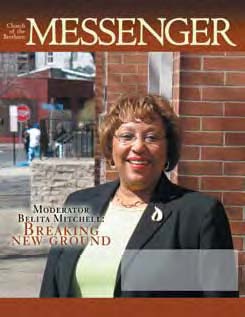
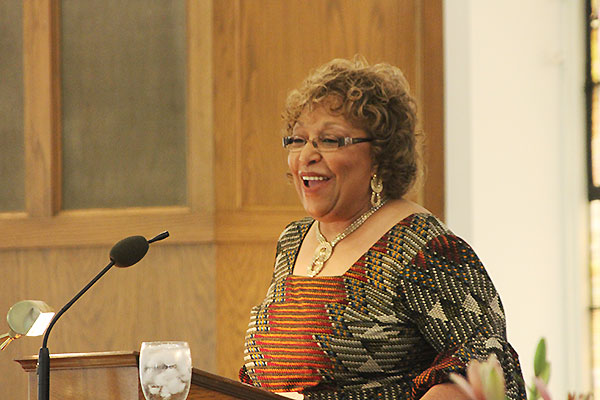
Her childhood was spent in rural Illinois, near Carbondale, and in the Detroit area. She came to Christ in the African Methodist Episcopal Church. She attended Southern Illinois University and there met her husband, Don Mitchell. After they were married, they moved to his hometown of Chicago and began to raise a family including a son who died in 2002, and a stepchild from her husband’s previous marriage. Eventually the family included several grandchildren.
She spent decades in a professional career not focused on Christian ministry, including doing public aid casework for a time in Chicago and 30 years as a sales executive in southern California. It was there that her family connected with Imperial Heights Church of the Brethren in Los Angeles, and the Mitchells began to take on church responsibilities on a volunteer basis. She eventually became part of the Church of the Brethren’s Black Advisory Committee, and while attending a meeting of the former General Board on behalf of the committee began to receive affirmations of her call to ministry.
She went through the licensing process in Pacific Southwest District, graduated from the Training in Ministry program, took classes at Fuller Theological Seminary, among others, and began as associate pastor at Imperial Heights in the 1990s. After she was called as pastor of First Harrisburg Church of the Brethren, she was ordained to ministry in 2003.
“Mitchell had portrayed Mattie Dolby, a Black Brethren woman who preached in the early 1900s, in vignettes at the 1995 Annual Conference,” noted a profile of Mitchell by Walt Wiltschek, published in Messenger in June 2007. “Dolby became a minister but was never ordained, so Mitchell considered her landmark ordination a tribute to Dolby’s legacy.”
For the 2007 Annual Conference she chose the theme “Proclaim the Power of God” and emphasized being “prayed up” as a theme of her leadership. Another theme was developing the diversity of the denomination. She made diversity “a cornerstone of her year as moderator, particularly in regards to building a more cross-cultural and ethnically rich church,” said the Messenger profile.
In 2017, she and her husband, Don, who is on the staff of Atlantic Northeast District, received the Revelation 7:9 Award from the Church of the Brethren Intercultural Ministries in recognition of their significant leadership. Her leadership was felt in numerous ways also as she was a popular preacher and speaker at events across the denomination.
In 2022, she was the preacher for the final worship service at the Annual Conference in Omaha, Neb. “One thing Jesus did well was cross social and cultural boundaries,” she said, in part. “In the church, we need to stop looking at all the differences…and look at the needs…. If we trust the power of the Spirit in us, there’s no end to what we can do to share the love.”
Find out more about Belita Mitchell’s life and ministry in the full remembrance published at www.brethren.org/news/2024/remembering-belita-mitchell
———-
Find more Church of the Brethren news:
- Brethren Volunteer Service Unit 340 completes orientation
- La Unidad 340 del Servicio Voluntario de los Hermanos completa la orientación.
- Inite Sèvis Volontè Frè yo 340 fini oryantasyon an
- New Pastor’s Manual in Haitian Creole and French to be used in Haiti and Africa
- Nuevo manual para pastores en criollo haitiano y francés para ser utilizado en Haití y África.