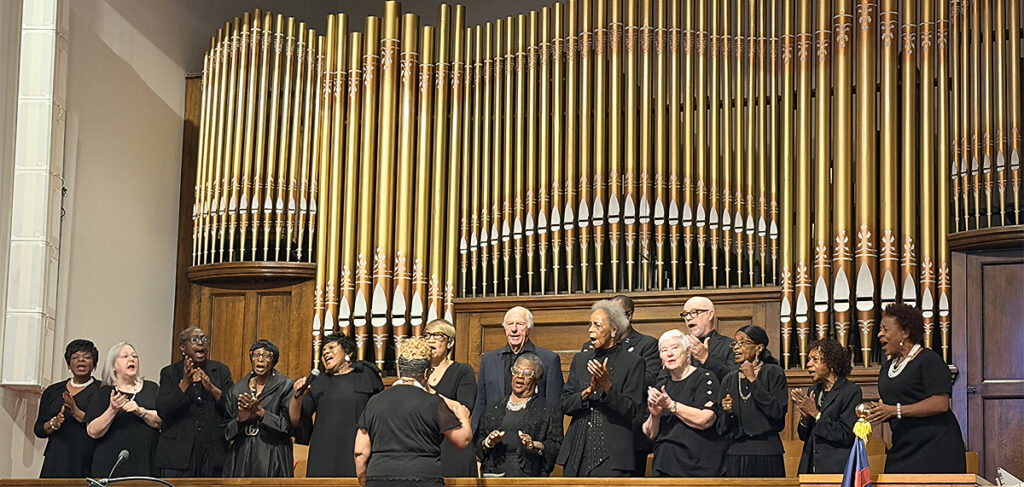
Christian Churches Together forum connects worship and fellowship with renewed examination of commitments to racial justice
By Madalyn Metzger
Celebrating 20 years of fellowship, Christian Churches Together (CCT) gathered in Birmingham, Ala., to give thanks for relationships across Christian traditions and consider what faithful witness requires in today’s societal and denominational context. Central to that reflection was its 2013 response to the Rev. Dr. Martin Lurther King Jr.’s “Letter from Birmingham Jail,” in which CCT member churches confessed failures to confront racism and committed to work together for justice.
Madalyn Metzger, executive director of engagement and communications, represented the Church of the Brethren at the Oct. 6–9 forum themed “Giving Thanks, Renewing Hope: 20 Years of CCT and 250 Years of the United States.”
The broadest ecumenical fellowship in the US, Christian Churches Together brings together Catholic, Orthodox, mainline Protestant, Evangelical/Pentecostal, and Historic Black Church traditions. Through worship, faith sharing, and receptive listening, participants examined how faithfully their churches have lived those 2013 commitments and what Christ is calling the church to receive, repent of, and do together now.
Revisiting the churches’ response
In 2013, the 50th anniversary of King’s letter, CCT issued a formal response grounded in the scriptural call to do justice, love kindness, and walk humbly with God (Micah 6:8)—confessing failures to confront racism and committing to examine their institutions, building relationships across racial and ethnic differences, and working together for justice.
Returning to Birmingham in 2026 invited participants to consider how those 2013 commitments guide their churches today, including when political loyalties, institutional interests, or reluctance to face conflict hinder action.
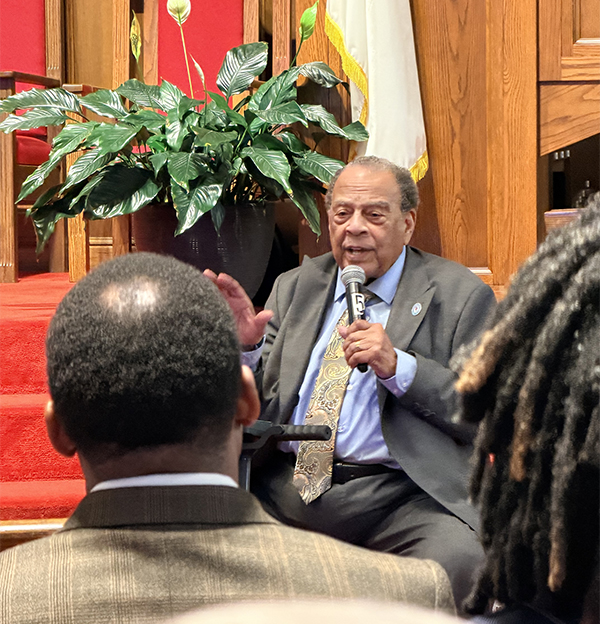
Participants worshiped at 16th Street Baptist Church, a center of civil rights organizing and the site of the 1963 Sunday morning bombing that killed four young Black girls. They heard from civil rights leader and former US Ambassador to the United Nations Andrew Young, walked together in prayer to Kelly Ingram Park, and visited the Birmingham Civil Rights Institute.
Human dignity and the practice of faith
Across the forum’s four days, various speakers’ reflections connected CCT’s 2013 commitments with the Christian teaching that every person bears God’s image (Genesis 1:27).
“Human dignity is not conferred by governments. It is bestowed by God,” said Bishop Joseph Bambera of the Roman Catholic Diocese of Scranton (Pa.) and chair of the US Conference of Catholic Bishops’ Committee on Ecumenical and Interreligious Affairs.
Beth-Sarah Wright, acting executive director of the Absalom Jones Episcopal Center for Racial Healing, emphasized the responsibility that follows. “Dignity has force,” she said. “It is not passive. It demands something of us. Respect is our response.”
Gabriel Salguero, founder and president of the National Latino Evangelical Coalition, described ministry through accompaniment. “Christ became flesh and moved into our barrio—our neighborhood,” Salguero said, echoing John 1:14 and inviting reflection on God’s presence among people and the church’s willingness to share in the lives of its neighbors. Drawing on the road to Emmaus story, Salguero reminded participants that Christ becomes known through walking together and breaking bread.
Continuing the work as Brethren
For the Church of the Brethren, these questions connect with our commitment to discerning scripture in community and following Jesus in daily life through repentance, peacemaking, and relationships with neighbors. They also connect with our denominational commitments to love neighbors through mutually transformative relationships and to seek God’s racial justice by confronting barriers within church life. In fact, the strategic plan of our Mission and Ministry Board grounds these commitments in scripture’s call to seek the community’s welfare (Jeremiah 29:4-7) and its vision of people from every nation worshiping together (Revelation 7:9).
Individuals and congregations wishing to explore further can read CCT’s 2013 response and ask whose voices shape decisions and what prevents full participation. Learning from neighbors affected by housing or educational inequities can help identify opportunities for service or nonviolent advocacy with local churches, organizations, and government.
This work takes patience, particularly when change is difficult or progress is uncertain. CCT executive director Monica Schaap Pierce offered words of encouragement rooted in faith.
“Hope is not the same as optimism,” she said. “It is a recognition that God is still at work.”
— Madalyn Metzger is executive director of engagement and communications for the Church of the Brethren, as well as publisher and editor-in-chief of Messenger magazine.
#MissionAndMinistryBoard #StrategicPlan #RacialJustice #LoveOurNeighbors #Discipleship #NewTestamentGiving
———-
Find more Church of the Brethren news:
- Annual Conference moderator shares theme statement for 2027
- El moderador de la Conferencia Anual comparte la declaración temática para 2027.
- Moderatè konferans anyèl la pataje deklarasyon tèm pou 2027 la
- What faithful witness asks of churches today: CCT’s 20th anniversary forum
- Sa temwen fidèl yo mande legliz yo jodi a: fowòm 20yèm anivèsè CCT a