

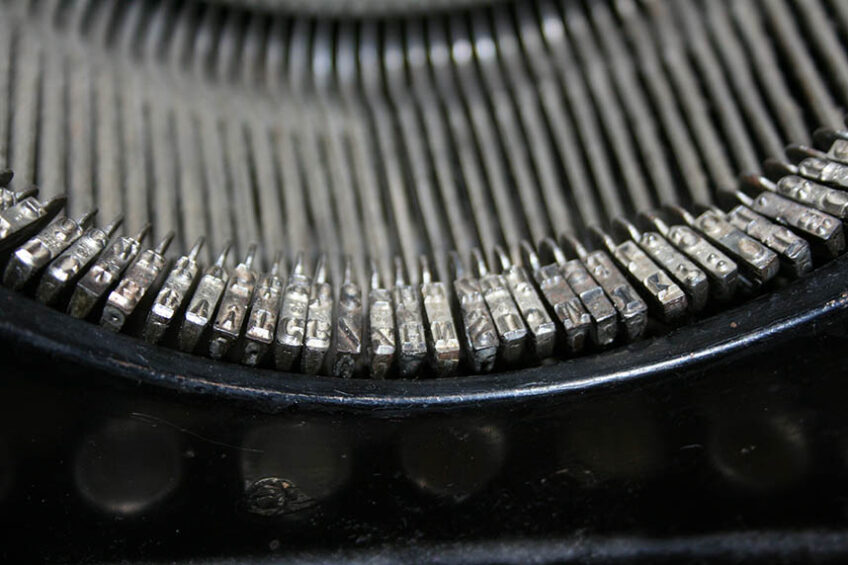
After six weeks of a summer typing class in ninth grade (I was a natural, it turned out), I wrote all my school papers on my mother’s old Royal manual typewriter. By senior year, I had a part-time job as a typist at a large company in town.
Almost everything I’ve ever written was done on a keyboard—first the manual typewriter, then the electric Adler that was a high school graduation gift, the IBM Selectric with the clever snap-in ball that allowed you to change the typeface, the clunky CPT word-processing machine with a plastic hood to muffle the sound, and finally the computer. My brain thinks best when connected to a keyboard.
Messenger magazine was the first department at the Church of the Brethren denominational offices to buy a desktop computer. While the organization had a mainframe, this was the first computer that sat on a desk. At the time, even the publishing house wasn’t ready to take the plunge.
That desktop publishing system back in 1989 consisted of one powerhouse computer and four regular ones, extra-large monitor that could display a two-page magazine spread, flatbed scanner, laser printer, PageMaker software, Windows 2.1, and a word processing system (I still miss the old WordPerfect software).
These elements and all the peripherals cost a lot of money, but they totaled about what we were spending in one year on typesetting and paste-up.
On the tail end of this big purchase, Messenger also bought an NEC UltraLite laptop computer. It came with a husky 2 megabytes of storage memory, which cost $490 more than the version with 1 megabyte. (Today my home laptop has 8,000 times more memory.)
On some keyboards you can tell which letters are used most often. Those keys might be extra shiny, or they might be so worn that the letters are rubbed off. The keys tell you something, but nothing meaningful, actually.
Somehow, though, those hardworking keys are a medium through which the words are launched into publication.
“Writing is fast typing,” wrote Catholic essayist, novelist, and editor Brian Doyle in The American Scholar. (He was explaining how to become a writer.)
For 37 years, Messenger staff have been typing fast on computers. Before that, we were typing fast on typewriters. And before that—well, I don’t exactly know, but I think it was slow.
Wendy McFadden is publisher of Brethren Press and executive director of communications for the Church of the Brethren.