

2 Chronicles 30:1-9, 26-27
This passage concerns the celebration of Passover. It begins by relating that King Hezekiah wrote letters to send throughout all the land to invite everyone to come to the Temple to celebrate Passover. As 2 Chronicles 29 explains, Hezekiah had recently restored worship at the Temple. Other passages record how Hezekiah had done away with the worship of idols and had attempted to centralize worship in Jerusalem.
Renewing relationships
What is most striking about Hezekiah’s invitation is that it is extended not only to the people of Judah but also to the people of Israel. A couple of centuries before Hezekiah’s reign, the kingdom of Israel had split into two rival nations (you can read about this in 1 Kings 12).
After a succession of dynasties, the northern kingdom of Israel was conquered by, and made a province of, the Assyrian empire around 722 B.C. Meanwhile, the Davidic dynasty remained ascendant in the southern kingdom of Judah. Hezekiah extends his invitation to the northern tribes shortly after the conquest by the Assyrian king Sennacharib. In essence, Hezekiah is inviting the people of Israel to reconnect with their identity as Yahweh worshipers.
Passover was an essential aspect of the religious identity of Yahweh worshipers during this time, just as it is an essential aspect of Jewish identity today. During Passover, the people remember Yahweh’s work to rescue them out of slavery in Egypt (see Exodus 12 for the full story). In the Gospels, Jesus reimagines Passover in light of his own salvific work. In doing so, he institutes our own practice of love feast.
Loyalty to the covenant
In his invitation to all the people of Israel and Judah to come to Jerusalem to celebrate Passover, Hezekiah warns them not to be like their ancestors (v. 7), whom he calls faithless and, what’s more, stiff-necked in their faithlessness! But in what way were their ancestors faithless? This accusation of “faithlessness” is leveled by the prophets, and others, against God’s people throughout the Hebrew Bible (another name for what we often call the Old Testament).
What is in mind here is a lack of loyalty toward Yahweh and Yahweh’s covenant with Israel. One of the stipulations of this covenant is that the people will worship Yahweh alone, placing all their trust in Yahweh and not worshiping other gods. Other stipulations include caring for the poor, widow, orphan, and immigrant. In fact, God commanded Israel not to treat immigrants any differently than citizens (see Lev. 19:34).
In the years between the establishment of the covenant and Hezekiah’s reign, the Israelites have routinely failed to abide by these stipulations. Hezekiah now calls the people to return to their identity, founded in this covenant with God, warning them that continued unfaithfulness will have consequences.
A return to the covenant involves celebrating Passover because Passover is an event, a ritual, a worship experience, that deeply grounds the people in the scriptural story, in God’s love and grace, and in their identity as a covenant people. Pause for a moment and consider: is there any event, ritual, or worship experience that might function similarly for us as Brethren?
Our grounding ritual
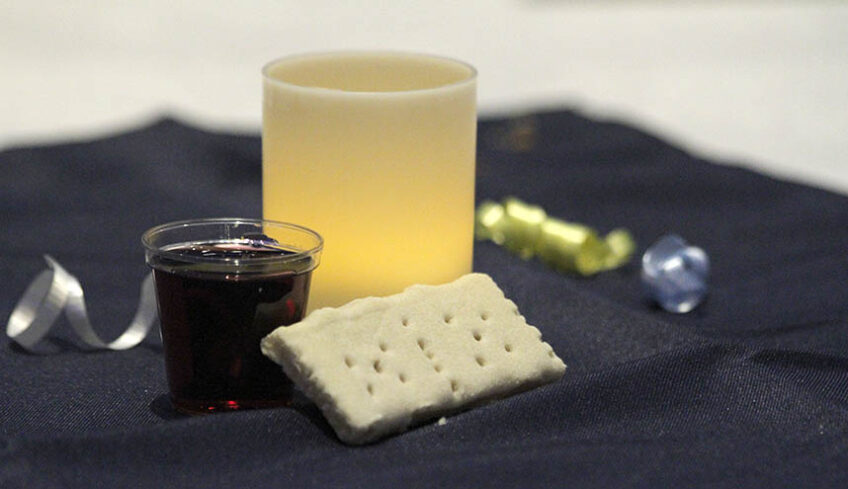
For me, the first ritual that comes to mind is love feast. Our love feast is loosely based on the Passover, since Jesus was celebrating the Passover meal when he instituted it. However, it isn’t only this literal connection that brings love feast to mind.
Love feast functions for us as Brethren very similarly to Passover for Jews. It grounds us in the story of scripture, inviting us to reenact Jesus’ last supper with his disciples. It grounds us in God’s love and grace as we give thanks for Jesus’ sacrifice. It reminds us of our identity as God’s people, as a people of the covenant, and as a people who—like Jesus—serve others. In this way, love feast is a powerful reminder of who we are, who God calls us to be, and how we ought to live our lives—in obedience to Jesus and the covenant expectations outlined in Jesus’ Sermon on the Mount (Matthew 5-7).
I am always struck by the way our Brethren identity is revealed during love feast. During love feast we read scripture and remind ourselves of Jesus’ final hours with his disciples. During those moments, Jesus humbled himself and washed their feet, telling them to do likewise. They sang together. They went out to the garden, and just before Jesus was arrested, Peter drew his sword to defend the Messiah. But Jesus told Peter to put his sword away. These words echo down through the ages to us, as we bear witness to Jesus’ call to peace by putting away our own weapons and refusing to do harm to other human beings.
While our menu at love feast likely differs from the meal Jesus shared with his disciples, the simplicity of our meals reminds us of Jesus’ call for his followers to live simple lives. Of course, all that we do at love feast we do together as part of a community, a family of faith. Love feast reminds us that we continue the work of Jesus peacefully, simply, and together.
We most likely celebrate love feast with our local congregation, but once upon a time our spiritual ancestors in the Church of the Brethren would have traveled to other congregations to celebrate love feast. In fact, they might have traveled far enough that they needed to stay overnight before returning home. This is not unlike Hezekiah’s call for people to come from far and wide to celebrate Passover. The king knew the importance of this celebration to establishing the identity of God’s people. Passover reminded Israel of God’s faithfulness and inspired them to respond by being faithful to God.
Making space for God
Passover was typically celebrated during the month of Abib, the first month of the ancient Hebrew calendar. This roughly corresponds with April in the Gregorian calendar. However, verses 2 and 3 of our passage explain that they could not celebrate Passover at the proper time because an insufficient number of priests had been able to sanctify themselves. This likely means that, as Hezekiah had only recently restored Temple worship, there had simply not been enough time to make he necessary preparations. Rather than wait a whole year, they decided to celebrate in the second month.
This flexibility is an important reminder for us. When it comes to important and vital rituals, like Passover or love feast, it can be tempting to imagine that everything must be done “just so.” But this passage reveals that even in an important and vital ritual like Passover or love feast, fulfilling the underlying purpose of the ritual takes precedence over schedules or other trappings that are not related to the core symbolism of the practice.
2 Chronicles 30 shows us that spiritual practices, in this case, specifically rituals involving worship, are vitally important. This certainly applies to love feast! However, it could also apply to other spiritual practices. It is important for us to regularly renew our commitment to our relationship with God, whether that renewal looks like attending love feast for the first time or the 80th time. But that renewal might also look like a renewed commitment to studying scripture, or to worshiping with our local community, or to spending more time in prayer, whether alone or with others.
All these practices serve to form our identity as followers of Jesus—people committed to faithfully walk in his way of life. Life is full of distractions and excuses that may pull us away from faithfulness to Jesus, just as the Israelites were pulled away, time and again, from their covenant with Yahweh. But our regular commitment to worship and remember, and especially to worship and remember as a community, renews our commitment to live our lives as Jesus lived his life.
Calvin Park is pastor of Brownsville (Md.) Church of the Brethren. This Bible study is adapted from A Guide for Biblical Studies.